
Your coding standards,
inside your agents' context
before they write a line.
Your policies, principles and language standards live in one place, and Qualimetry puts them into your agents' context as they write. Agents get it right first time instead of being corrected in review, and every pull request is still checked against the same standards.

Compliance Center: every project scored against your Policies, Principles and Language Standards, trended over time, and passed or failed against your bar.
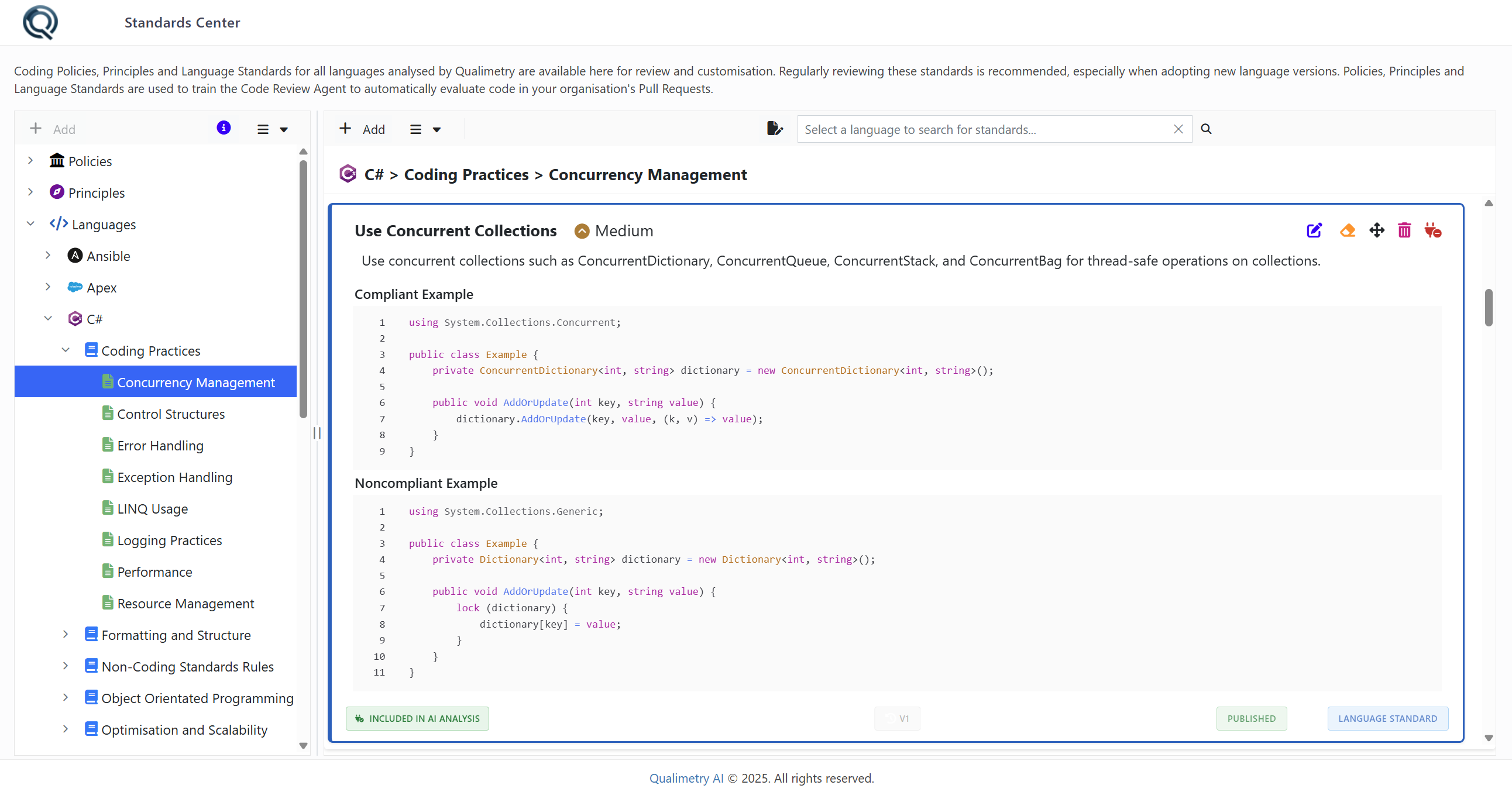
Standards Center: author your Policies, Principles and Language Standards once, in one governed place.
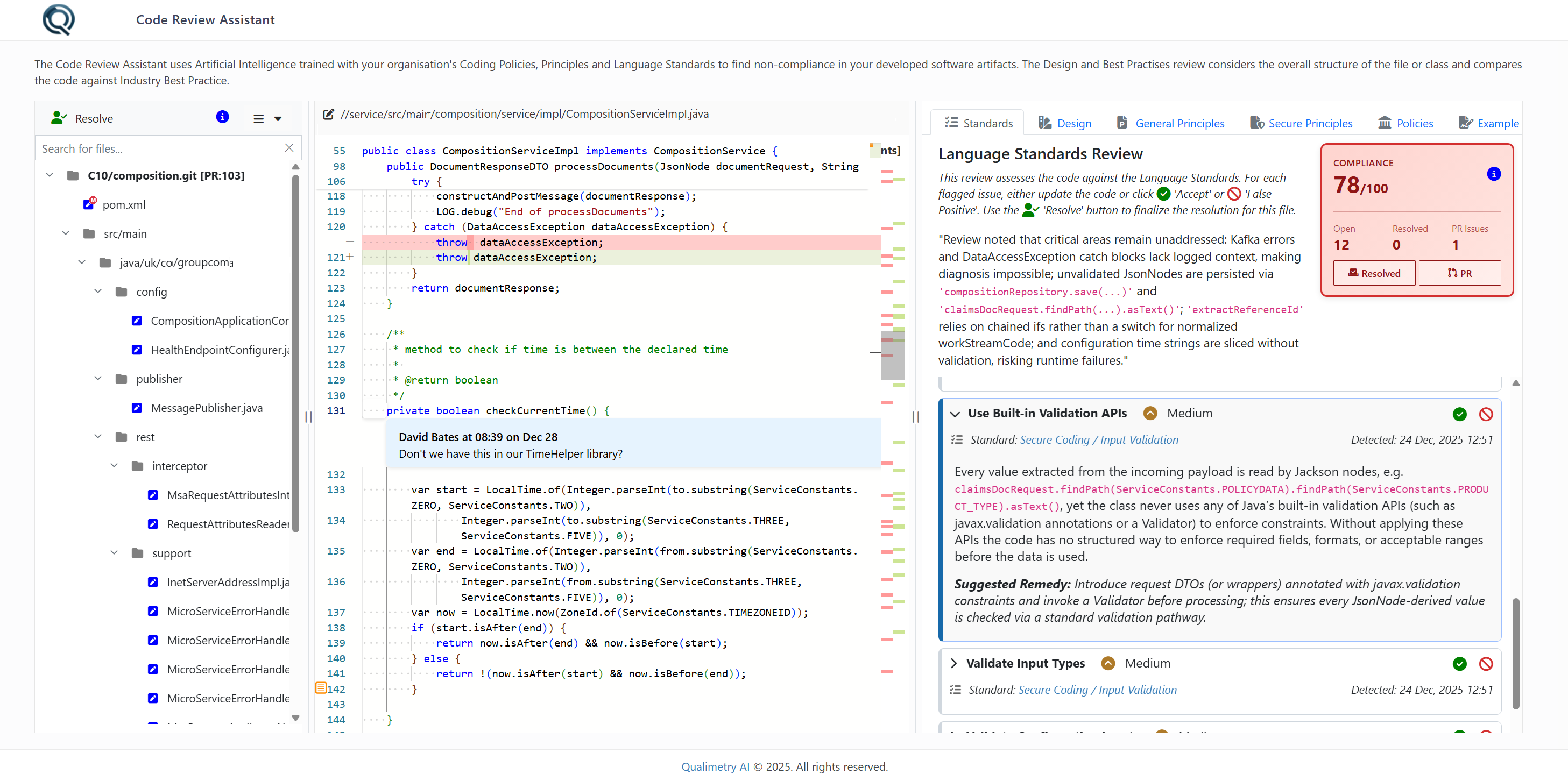
Every pull request checked across Language Standards, Design and Best Practice, Principles, Security and Policies, and scored for compliance.
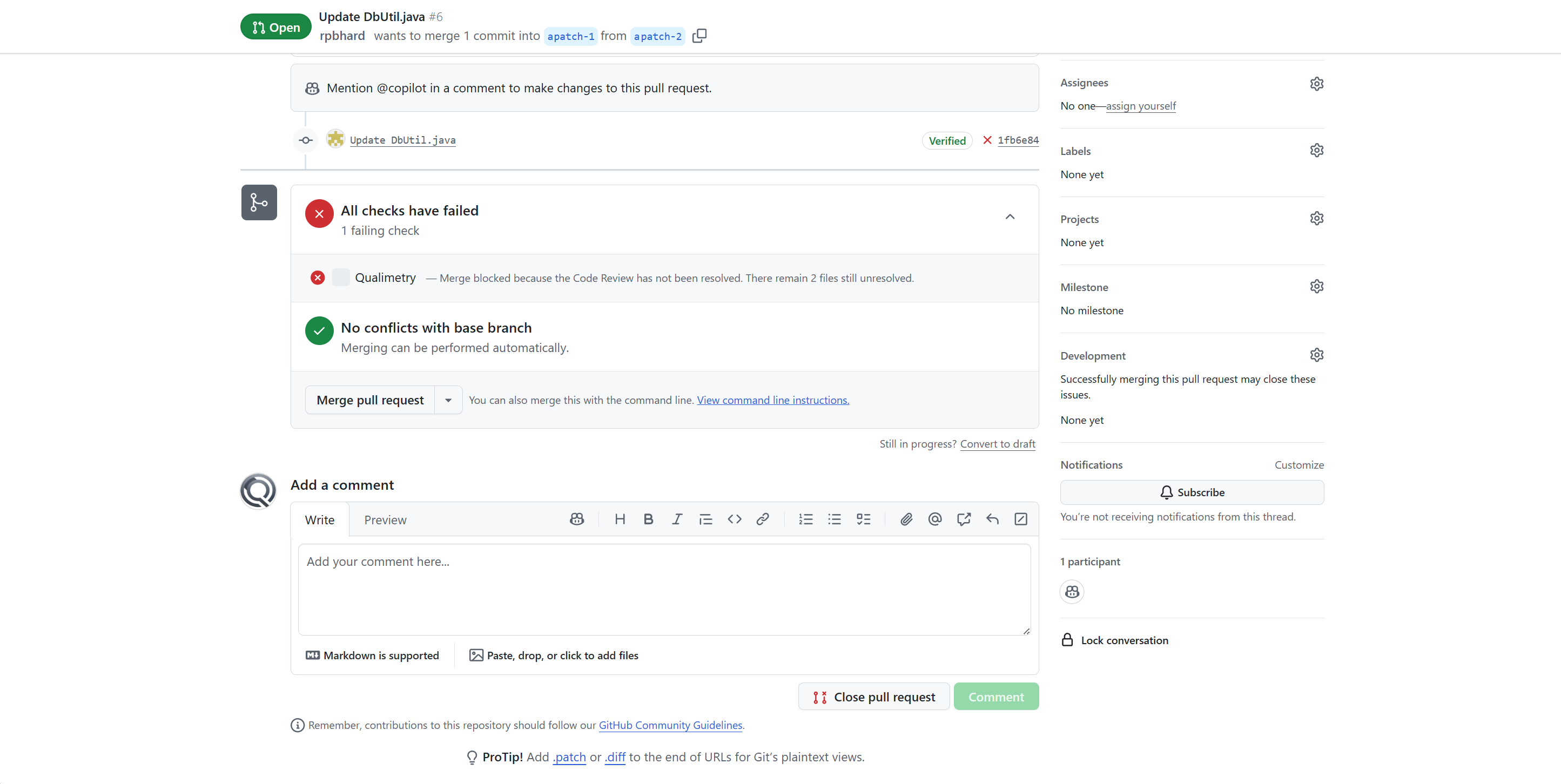
Hold the merge until the code meets your bar, on the compliance score alone or on a named human's approval.
 Ansible
 Apex
Apex C#
C# C++
C++ Cobol
Cobol CSS
CSS Delphi
 Docker
 Gherkin
 Go
Go HTML
HTML Java
Java JavaScript
 JSON
JSON Kotlin
 PL/SQL
 PowerShell
 Python
 SQL
SQL Swift
Swift T-SQL
T-SQL Terraform
 TypeScript
 Visual Basic
 Visual Basic .NET
 XML
XML YAML
Ansible
Apex
C#
C++
Cobol
CSS
Delphi
Docker
Gherkin
Go
HTML
Java
JavaScript
JSON
Kotlin
PL/SQL
PowerShell
Python
SQL
Swift
T-SQL
Terraform
TypeScript
Visual Basic
Visual Basic .NET
XML
YAML
Ansible
Apex
C#
C++
Cobol
CSS
Delphi
Docker
Gherkin
Go
HTML
Java
JavaScript
JSON
Kotlin
PL/SQL
PowerShell
Python
SQL
Swift
T-SQL
Terraform
TypeScript
Visual Basic
Visual Basic .NET
XML
YAML
Ansible
Apex
C#
C++
Cobol
CSS
Delphi
Docker
Gherkin
Go
HTML
Java
JavaScript
JSON
Kotlin
PL/SQL
PowerShell
Python
SQL
Swift
T-SQL
Terraform
TypeScript
Visual Basic
Visual Basic .NET
XML
YAML
YAML
Ansible
Apex
C#
C++
Cobol
CSS
Delphi
Docker
Gherkin
Go
HTML
Java
JavaScript
JSON
Kotlin
PL/SQL
PowerShell
Python
SQL
Swift
T-SQL
Terraform
TypeScript
Visual Basic
Visual Basic .NET
XML
YAML
Ansible
Apex
C#
C++
Cobol
CSS
Delphi
Docker
Gherkin
Go
HTML
Java
JavaScript
JSON
Kotlin
PL/SQL
PowerShell
Python
SQL
Swift
T-SQL
Terraform
TypeScript
Visual Basic
Visual Basic .NET
XML
YAML
Ansible
Apex
C#
C++
Cobol
CSS
Delphi
Docker
Gherkin
Go
HTML
Java
JavaScript
JSON
Kotlin
PL/SQL
PowerShell
Python
SQL
Swift
T-SQL
Terraform
TypeScript
Visual Basic
Visual Basic .NET
XML
YAMLAgents write the code now. Whose standards are they following?
A coding agent is fast, tireless and completely uninformed about how your team has decided software should be built. Your policies, principles and language standards sit in documents it never opens, so it writes to a generic idea of good instead of yours. You find out in review, after the work is done.
A linter tells an agent it was wrong. Qualimetry tells it what right looks like.
Rules-based tools work at the bottom and at the end: single-line patterns, checked once the code already exists. Your policies, principles and design standards sit above that, and they matter most before the first keystroke.
Rules-based analysis and linters
- Runs after the code exists
- Generic rules somebody else wrote
- Line-level syntax and known bug patterns
- Tells the agent a line is wrong
- Findings pile up for a human to clear
Qualimetry
- Reaches the agent before the first line is written
- Your policies, principles and language standards
- Architecture, design intent, secure-by-design and team policy
- Hands the agent the standard, and a compliant example
- Most findings never get created
Standards reach the agent while it writes, not after it has finished. Compliant by construction, not by correction.
Define it once.
Every agent writes to it.
One place to author your standards, and a read-only MCP server that carries them to every agent and IDE your teams use. Every language, every team, human or agent. What review then finds is the exception rather than the workload.
Standards Center
Your Policies, Principles and Language Standards in one governed place, versioned and managed. Comprehensive standards for every language your teams use, kept current as those languages evolve.
Delivered into the agent's context
A read-only MCP server carries your standards to Claude Code, OpenAI Codex, Cursor and VS Code with GitHub Copilot. The agent can read your standards; it can never change them.
Applied without anyone remembering to ask
The coding-standards skill loads the standards for the language being written whenever source code is being created or modified. Nobody has to paste a standards document into a prompt.
Standards you write in plain English
Describe a new standard in your own words and it applies from the next review onwards. Start from the supplied baseline or import what you already have.
AI Code Reviewer
Every pull request is checked against five perspectives: Language Standards, Design and Best Practice, General Principles, Secure Principles and your Policies. The same standards the agent was given, so review confirms rather than discovers.
Compliance Center
Compliance scored per file and per project, baselined and trended. Gate the merge on the score, and add human approval when you want a person accountable for what lands.
From a standard you wrote to a merge you can defend
Your standards are authored once, delivered into every agent's context before it writes, and used again to check the pull request. Review confirms rather than discovers.
Diagram: how a standard travels from the Standards Center to the merge
A six stage flow in two halves, joined by the pull request. Before the code exists: you author the standard in the Standards Center, it is delivered into the agent's context through the MCP server, and the agent writes to it. After the pull request opens: the AI Code Reviewer checks the same standards, an optional human review can be switched on to block the merge until a person has resolved every open finding, and the merge gate decides on the compliance score. Review findings feed back into the standards.
- Author the standard Policies, principles and language standards, in one place
- Into the agent's context Read-only MCP server, agent app and skills
- The agent writes Compliant by construction, not by correction
- AI Code Reviewer Five perspectives, checked against the same standards
- Human review Block the merge until a person has resolved every open findingOptional, enable when required
- Merge gate The compliance score decides
Author your standards
Manage your Policies, Principles (General and Secure) and Language Standards in the Standards Center. Start from the supplied baseline or import your own.
Connect your agents
Install the agent app once. Your standards reach Claude Code, Codex, Cursor and VS Code through a read-only MCP server.
The agent writes to them
The coding-standards skill loads the standards for the language being written, so the agent applies your rules instead of a generic idea of good.
Review confirms rather than discovers
Every pull request is checked against the same five perspectives. Turn on human review when you want a person accountable for what merges.
Score, baseline and gate
Compliance is scored per file and per project, trended against a baseline, and used to gate the merge.
Standards that reach everyone who writes
The same standards, wherever the code comes from: the developer at the keyboard, the agent working alongside them, and the review that checks what they produced.
Right First Time
- Your agent already has the standard before it writes
- No pasting a standards document into a prompt
- Fewer review rounds on rules written down years ago
- A compliant example instead of a list of complaints
Govern Standards
- Define the standard once, in plain English
- Govern what agents write, not just what people write
- The same bar applied to every pull request
- Gate the merge on the compliance score
Compliance You Can Show
- Govern Policies and Principles across every project
- Compliance scored and baselined, not asserted
- Add human approval where accountability matters
- Reduce risk with Secure Coding Principles applied up front
Works where your agents work
Connect the agents your team already codes with and the platform your code already lives on. Standards go out through a read-only MCP server, and pull requests come back checked against them.
Where your agents work
Claude Code
- Standards via read-only MCP
- coding-standards skill
- review-check skill
OpenAI Codex
- Standards via read-only MCP
- coding-standards skill
- review-check skill
Cursor
- Standards via read-only MCP
- Standards for the language in hand
- Compliant code examples
VS Code and GitHub Copilot
- Standards via read-only MCP
- Check the current file for findings
- Skills installed in one step
MCP Server
- Read-only by design
- Standards for every language
- Findings and compliant examples
Import Standards
- Bring your own Policies and Principles
- Start from the supplied baseline
- Review, version and manage
Where your code lives
GitHub
- Every pull request checked
- Five review perspectives
- Merge gated on compliance
GitLab
- Every merge request checked
- Five review perspectives
- Merge gated on compliance
BitBucket
- Every pull request checked
- Five review perspectives
- Merge gated on compliance